Subcategories
-

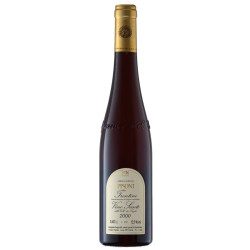
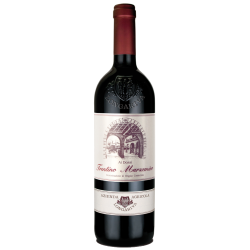
Trentino
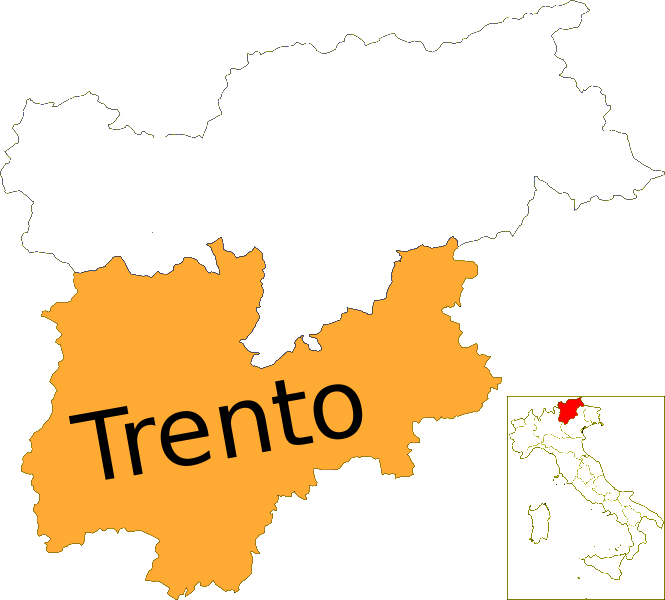
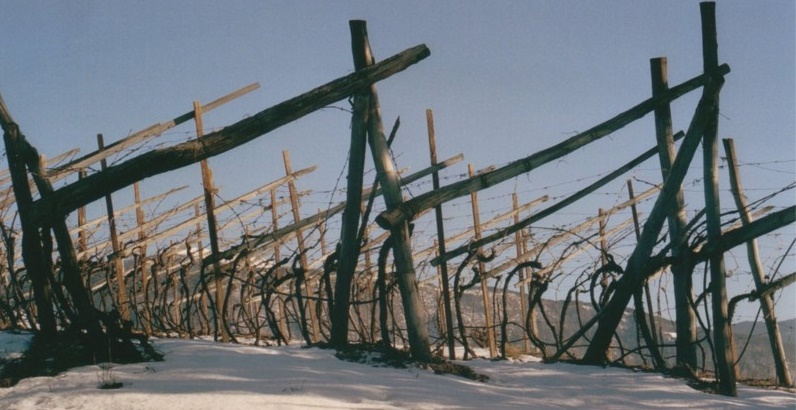
The discovery in the village of Cembra in 1839 of a "situla”, an Etruscan vase dating back to the eighth century BC, is the oldest evidence of viticulture in this region. The territory is completely mountainous; from a climatic point of view the region is divided into 4 areas: in Val di Cembrait is typically Alpine, and in Vallagarina, and Adige Valley it is sub-continental while to the south in the Valley of the lakes, towards Lake Garda the climate is typically Mediterranean. The red grape most cultivated is the schiava grape, the white being the chardonnay grape which is used in particular for the sparkling Trento DOC. The good organoleptic characteristics of Trentino wines, in particular, their great olfactory strength are not only a result of the large range in temperature, but also due to the fact that the hilly or mountainous areas promote excellent drainage and are positioned in such a way to benefit directly from the suns rays. TheVallagarina between Borghetto and Nomi along the River Adige is the area where themarzemino is at its best. The focus of wine production is the Valdadige, stretching from Aldeno to Roverè della Luna right upto Campo Rotaliano, where the red teroldego grape rules. In Valle di Cembra, from Lavis to Faver, schiava grossa, müller thurgau, pinot blanc and chardonnay, are produced. In Sarca Valley, which extends from Vezzano to Lake Garda in the South mainly autochthonous white grape nosiola is grown. This grape, dried on wooden slats, dried by the afternoon wind known as "Ora", is used principally for the production of a really excellent dessert and meditation wine: Vino Santo Trentino.
-
Alto Adige


The territory of the South Tyrol is predominantly mountainous. The land, from the north, is mainly limestone, becoming porfirici further south and granite arriving in the Trentino region. The region is crossed vertically by the River Adige that depending on the conformation of the shore, the terrain differs with carbonate to the left of river, crystal, granite and basalt to the right. In Alto Adige, the climate is typically alpine with a range of temperatures. The South Tyrolean wine production is mainly characterized by red wines, the main wine-growing areas are: Valdadige from Merano to Salorno with pinot blanc, pinot grigio and schiava ; theValle Inarco from Bressanone to Bolzano with kerner, silvaner and veltriner; and the average low Valle Venosta with kerner, and müller thurgau. Other grapes which are very important for South Tyrol are the red Lagrein cultivated mainly in the area arounchardonnayd Bolzano, and traminer aromatico or gewürztraminer that owes its origins to the village of Termeno.
-
Veneto


History and Tradition
The first human settlements of the lagoon and the surrounding areas maintained a simple social structure until the arrival of the Romans in the second century B.C. who divided the land into parcels of about 4,800 square meters and distributed those tracts among the locals to be cultivated.The Romans founded the cities of Verona, Vicenza, and Padova, and named what was then the 10th imperial region, Venetia. Both the Veneto region and the province of Venice (Venezia in Italian) derive their names from the original Latin name of the area. The precursor of the city of Venice that we know today was founded during the Middle Ages when the locals escaped the barbaric invasions that followed the decline of the Roman Empire by taking refuge in coastal areas, islands, and the lagoon’s marshland.
The Venetian trade routes that connected Europe with Asia brought great wealth and general prosperity to the region. In many provinces, especially around Treviso, mulberry cultivation and the breeding of silkworms imported from China brought more affluence and prestige to local residents. With money pouring in from all quarters, Venice began its great building projects, chief among them creating the lagoon and canal infrastructure and systems still enjoyed and used today.
Between the end of the 19th century and the beginning of the 20th centuries following the opening of the Suez Canal, Venice once again became an important port city. Foreign investment financed the creation of the industrial infrastructure of Porto Marghera and freed the port of Venice from the burden of commercial navigation. Improved communications technology has allowed the rest of Italy and the world beyond closer ties to Venice, and has contributed to making Venice into an incomparable tourist destination.
The long period of power and splendor that blessed Venice encouraged the highest quality creations by local artisans. The ongoing request for jewelry, precious fabrics, lace, glass, wood and ceramic products by the noble Venetians shaped the development of typical stores along the narrow calli (streets) of Venice as well as factories both inland and on the lagoon islands. Up to today, popular tourist destinations are the Murano and Burano islands, famed for their glasswork and needlepoint products.
The Wines
Veneto is among the foremost wine-producing regions, both for quality and quantity. The region counts over 20 DOC zones and a variety of sub-categories, many of its wines, both dry and Spumanti, are internationally known and appreciated.The three most well known DOCs are Bardolino, from the town with the same name and surrounding the shores of Garda Lake, Valpolicella, and Soave. Other noteworthy wines produced here are the white Bianco di Custoza, the excellent sparkling Prosecco, the Breganze, and the Amarone (a rich and powerful red from the Verona province). If you travel to the Treviso area, look for the little-known Clinton, a wine that is banned from distribution because it does not conform to the DOC standards, but is produced in limited quantities for local consumption.
The importance of winemaking in this region is underscored by the creation in 1885 of the very first Italian school for vine growing and oenology. In addition, Veneto was the first region to constitute the first strada del vino or "wine road". This first wine-touring road featured special road signs providing information on vines and the wines they were made into and joined the Valdobbiadene and Conegliano DOCG zones crossing a series of hilly vineyards.
The most appreciated wines in the region come from the provinces of Treviso, Verona, Padova, Venice, and Vicenza. The area around Verona, with its temperate climate and hilly surrounding, is believed to have cultivated grapes since the Bronze Age.
-
Lombardy


The cultivation of grape vines in Lombardy dates back to VII-V century BC by Atestini, Etruscans and Ligurians, even if there is archaeological evidence to testify the presence of vines as early as prehistoric times. The climate of the region is very diverse, generally it boasts a continental climate thanks to the presence of the Great Lakes, but also in the mountainous areas and alpine valleys of Valtellina, where there is a good exposure to the sun with the absence of fog, this affords a milder climate than in the plains. Among the most important red grapes produced here, there is nebbiolo in Valtellina, barbera, bonarda, croatina, merlot and cabernet;pinot noir is produced in Oltrepò Pavese and in Franciacorta that together with the chardonnaygrape contribute to the production of sparkling wines. Apart from chardonnay, other white grapes produced are the tocai friulano, pinot blanc, riesling and various trebbiano.
-
Friuli Venezia Giulia


History and Tradition The history of this region is quite particular, given its geographic, ethnical, and cultural location as a frontier hub between central Europe to the north, the Slav regions to the east and the Italian Peninsula to the west and south. One of the oldest inhabited Italian regions, it is believed that the first humans here dated back as much as 20,000 years ago. Around 1000 B.C., the Illyrian built fortified villages creating a basic social structure, but with the arrival of the Romans, the land and society was restructured following the Roman model. They built roads, introduced new flora, parceled up the land for cultivation and founded cities, of which Aquileia is a valuable example that has survived to the present days. With the fall of the Roman empire and the subsequent invasion of barbaric tribes, the lqand emptied as the inhabitants fled to safer areas and the region's development slowed to almost a standstill. In the Eighteenth century Charles of Hapsburg established the “free ports” of Trieste and Fiume, giving the Austrian empire access to the Mediterranean Sea. This generated a wide economic and social gap between these two newly prosperous centers and the poverty-ridden Friuli and Carnia areas. These days, the economic situation is much more balanced. Trieste has since lost importance as a Mediterranean port city and after WWII, the integration of Friuli's traditional agricultural heritage with the fast-growing industrial economy brought new wealth to the area. The region has a thousand year tradition of artistic mosaic making which dates back to pre-Roman times. The mosaics inside the still functioning basilica of Aquileia, which was built by the Romans, are excellent examples of this ancient art. The local traditional festivals are an expression of the complex ethno-linguistic history of this part of Italy. Some of the dialects spoken in these areas are derived from a neo-Latin language called ladino, while others have strong Venetian influences, and still others derive from the Slavic language. Of particular interest is Resia, where the locals speak an ancient Slavic dialect and perform unique traditional dances accompanied by violin music which is unparalleled throughout Italy. The Wines Though the wines produced in this region represent only two percent of the Italy's production, to some they are comparable in quality to wine produced in Piedmont and Tuscany, the two most celebrated wine producing regions of Italy. The main difference between the regions is that Friuli- Venezia Giulia wines are mostly white, though some exceptional red can be found as well. The local wines are remarkable for the number of grape varieties that are used in their blends. In addition to the native grapes, different varieties have been introduced over time. Add to this the winemaking skills of the Friulani, and the result is the creation of exceptional wines. The foremost white wine produced in this region is the Tocai Friulano. Because of a confusion between a Hungarian grape called Tokaj and a French one called Tokay, the European Community has demanded name changes of the French and Friuli grapes by 2006, allowing Hungary to keep the original Tokaj name. As a result, in a few years this most appreciated local white will be known under a different denomination, which we hope won't be an uninspired generic name such as Friuli Bianco or Bianco Friulano. Other local whites include Chardonnay, Müller-Thurgau, Pinot Bianco, Pinot Grigio, Ribolla Gialla, Riesling Italiaco and Riesling Renano, Sauvignon Blanc, Traminer Aromatico, Verduzzo and Malvasia Istriana. This last one is a somewhat metallic wine that complements wonderfully the Adriatic seafood recipes. It should not be confused with the Malvasia produced in Sicily, which is a totally different wine. Among the red produced in Friuli – Venezia Giulia are Cabernet Franc, Cabernet Sauvignon, Collio and Collio Cabernet, Merlot, Pignolo, Pinot Nero, Refosco dal Peduncolo Rosso, Schioppettino, Tazzelenghe, and Terrano. The Terrano is made with the Refosco grape grown in characteristic red soil. The peculiar quality of the sun and soil of the Carso area contribute to the wine’s particular characteristics. Low in alcohol, it is sometimes prescribed by doctors to cure digestive problems as well as to patients who need iron, because its acidity is thought to be beneficial.
-
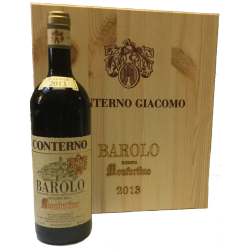
Piedmont


It was the Greeks who introduced vines into Piedmont, and by the Roman era wine production was flourishing. Today, the region is one of the largest areas for Italian wine quantity and quality. The areas of interest are many ,as the vast area of Monferrato, Roero and Langhe. Most Piedmontese wines are DOC or DOCG, the majority of which are derived from the nebbiolo grape like the two noble red wines of Barolo and Barbaresco, together with, Gattinara, Nebbiolo d'Alba, Bramaterra, Lessona, Boca, Carema, Fara, Roero and Sizzano, all suited to keep over many years. Apart from nebbiolo, other red grapes grown are namely Barbera, Dolcetto, Freisa and Grignolino. Whilst the most significant among white wines, responsible for 30% of the regional production, are moscato bianco, cortese, erbaluceand arneis.
-
Aosta Valley


The Valle d'Aosta is the smallest region of Italy, being mountainous, it has a decidedly alpine climate. Wine production is mainly concentrated along the valley of the Dora Baltea. The mountainous terrain of this area requiresfarming on terraces. Most wine produced in Valle d'Aosta are rare, sought after and consumed in the region. There are various types of grapes grown here, namely the nebbiolo for theDonnas and the Arnad-Montjovet that are comparable to those of finesse near Piedmont, fumin, petit rouge, noted by the smell of fresh red berries, premëtta, etc. .. The valley also produces excellent white wines but always uncommon, Blanc de Morgex et de la Salle from prié blanc grapes, chardonay and some malvasie. The range of wines produced is wide and the designation of origin is unique either Valle d'Aosta or in French: Vallée d'Aoste.
-
Liguria


Liguria is predominantly mountainous and hilly. The morphology of the land is not particularly suited to farming of grapes, especially the Ponente area which is predominantly marble and limestone and Levante, made up of clay limestone. There are many valleys and waterways in this region and the climate is different throughout, milder on the coast, protected from the mountains to the north, on the continental towards the slopes of Padano. The rains are uncommon in the region, but abundant. The most popular varieties of grape are the rossese for Rossese of Dolceacqua, vermentino, pigato and omerascoespecially in DOC Riviera Ligure di Ponente. Another denomination to be certainly mentioned is the DOC Cinque Terre with a type of rare, sweet or semi-sweet grapes called Sciacchetrà attained from the grapes ofbosco, albarola and / or vermentino.
-
Emilia Romagna


History & Tradition
As the hyphenated name suggests, Emilia-Romagna includes two distinct areas with Bologna, the region's capital, marking more or less the dividing line. Emilia, with its prosperous provinces lined along its ancient Roman-built Via Emilia, occupies the western sector, while Romagna lies to the east of Bologna and stretches all the way to the Adriatic Sea, the historic town of Ravenna and the well-known resort of Rimini. Back in the time when agriculture was the main source of business in the area, well-being and wealth were synonymous in the local culture and speech. The fertility of the Emilia-Romagna plains generated riches and strongly influenced the traditions and popular festivals. Nowadays, Emilia-Romagna's cities rank at the top of the national listing for the quality of life with Modena and Reggio Emilia competing at times for the title of Italy's wealthiest city. Bologna is the oldest European university site and its medical school still draws many international students under her comfortable and reassuring porticos. The Accademia Militare di Modena, or Modena Military Academy, was founded in 1669 by Duke Carlo Emanuele II of Savoia and in 1678 it became the first Institute for Military Training (Istituto di Istruzione Militare) in the world. Today it still attracts future heads of state and military officers from various parts of the world and the view of a 'cadetto', dressed in traditional uniform is a common sight under the porticos of downtown Modena. Emilia-Romagna has given many remarkable artists and professionals to Italy and the world such as opera stars Luciano Pavarotti and Mirella Freni, composer Giuseppe Verdi, film directors Federico Fellini and Pupi Avati. Fashion guru Giorgio Armani, the amazing painter Ligabue, popular singers Lucio Dalla, Vasco Rossi, Francesco Guccini and Zucchero Fornaciari, and poet Giovanni Pascoli are also from this area. Of course, we must also include Enzo Ferrari and Ferruccio Lamborghini, world famous automobile makers. The Wines The strongly individual characteristics of Emilia-Romagna wines make them northern Italy's most eccentric. They are different, on the whole, from the wines of their neighbors. The best Emilian wine is perhaps Lambrusco, a sparkling, joyous red made from grapes grown on high trellised vines in four DOC zones in the Modena, and Reggio Emilia provinces. Lambrusco is made for consumption within the year and very few consumers abroad have tasted the wine in its authentic dry style. Most exported Lambrusco is sweet and 'amabile'. Though both types count in historical traditions, the dry variety is considered the best match for the area's rich cuisine. In the foothills of the Apennines to the south of the region, fun-loving white wines are made from Malvasia, Trebbiano and Ortrugo as well as zesty reds which are made from Barbera and Bonarda grapes. Though in the areas of the Colli Piacentini, the Colli Bolognesi and the Colli di Parma, more serious wines are made from Sauvignon, Chardonnay, Pinot, Barbera, Cabernet and Merlot, the majority of Emilian wines are frothy and somewhat lightweight. In Romagna, wines are made primarily from the native Sangiovese, Trebbiano and Albana grapes. Albana di Romagna, which became Italy's first DOCG white wine in 1987, is usually dry and still with a distinctive almond undertone and finish. The traditional semisweet and bubbly version of Albana Spumante is a rich and sweet passito made from partly-dried grapes. Another Romagna white, the Trebbiano di Romagna, is often light and fresh and, whether still or bubbly, has a fragility that renders it best in its youth. The king of Romagna wines, though, is Sangiovese, usually a robust red with pronounced fruity flavors, reminiscent of the great variety of produce and fruits gracing the area. More and more often, though, local producers of Sangiovese are making superior reserve wines of greater depth of bouquet and flavor, capable of aging gracefully. Local vintners and winemakers are actively building interest in rare local wines such as the DOC white Pagadebit and the red Cagnina and Bosco Eliceo. Other varieties produced here are Sauvignon, Chardonnay, Pinot and Cabernet.
-
Toscany
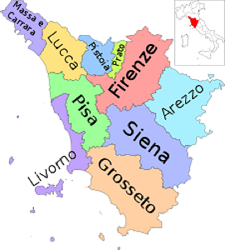
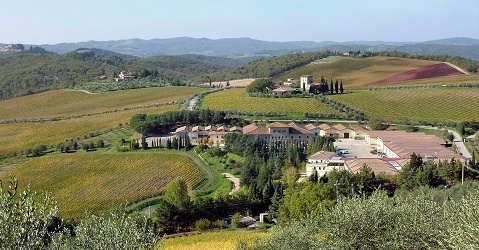
In its history Tuscan winemaking has lived through many ups and downs, before becoming one of the top regions in Italy producing wines. Vines were already present before the Etruscans, and with the influence of the Greeks began to include wine making into its economy, but this was almost entirely abandoned during the Roman period. The rebirth occurred after the decline of the Roman Empire, with a growth in terms of quantity and quality steadily up until the present day. The territory is mainly hilly and mountainous. The morphological shape of the land is variable: northwest is dolomitic limestone; northeast is volcanic with ferrous with the presence of sandstone, clay and tuffs, and the central area is formed by galestro (shaved rocks with sharp edges), sandstone and clay. The Tuscan climate is temperate , with differences from area to area, along the coast and on hillsides temperatures are mild in winter and cool in summer, towards the Apennines the climate is continental. The structure of the wines increases travelling eastwards due to the climate and quality of the land. The most significant area of Tuscany is the DOCG Chianti and Chianti Classico where the grape sangiovese is king. The DOCG in this region are many, like the famous Brunello di Montalcino, the aristocratic Carmignano, Vino Nobile di Montepulciano, Morellino di Scansano and the white Vernaccia di San Gimignano. Numerous are also the DOC where in addition to sangiovese and canaiolo nero grapes, we find thecolorino, ciliegiolo, prugnolo gentile and international cabernet sauvignon and franc, merlot and syrah, for the white vernaccia di S. Gimignano, trebbiano toscano and malvasia bianca lunga. These last two grapes combine to produce another memorable wine Vin Santo del Chianti and Chianti Classico, the red version is produced with sangiovese and is called Occhio di Pernice.
-
Marches


History and Tradition The Marches were part of the territory that extended inland along the eastern bank of the Tiber river and up north all the way to the Po Valley. The area was occupied by the Umbri (from the Greek Ombrikoi) and the Picentes (Greeks who called part of the region Picenum) since early Paleolithic times. Colonized and organized by the Romans in the 3rd century B.C., the area was invaded by the Goths after the fall of the Roman Empire. In the 6th century, the northern part]of today's Marches, including the cities of Ancona, Fano, Pesaro, and Senigallia, in addition to adjoining territories, came under Byzantine rule. The southern section became part of the powerful Lombard duchy of Spoleto. In the 8th century, the region was donated to the papacy in two steps, first by Pepin the Short, the first Carolingian king of the Franks, in 754 and then by his son Charlemagne in 774. The papacy rule though, was largely nominal and later emperors granted various fiefs in the area to faithful underlings until the 13th century. The name Marche or “boundaries”, was originated around the 10th century because the fiefs of Ancona, Fermo and Camerino were established at the border of the Holy Roman Empire. Despite the fighting between the popes and the emperors over the control of the region, some cities established free communes or were governed by noble families, including the Malatesta, the Varano, and the Montefeltro. However, from the 13th to the 16th centuries, the popes gradually reestablished their political rule in the Marche and ended local autonomy. After being occupied briefly by the French from 1797 to 1815, it was restored to the papacy until 1860. For a period of time The Marches was joined to the kingdom of Sardinia along with Umbria and Tuscany. Today's Marches reaches from the eastern slopes of the Apennines to the Adriatic Sea. Mostly hilly or mountainous except for a narrow coastal strip, the region is drained by the Metauro, Potenza, Tronto, and Nera rivers. Farming and livestock are the main occupations producing cereals, olives, grapes and vegetables. Manufactured items include ships, textiles, chemicals, pottery and a well-established tradition of both industrial and artisans' hand-made musical instruments. In addition, the region has four main commercial and fishing ports in Pesaro, Fano, Senigallia and Ancona, the region's capital. The Wines In this little known region the amount of red and white wines produced are almost equal. The main regional white is the excellent Verdicchio, a dry characteristically flavored exceptional white, made from at least 85% of the grape with the same name. Both the Verdicchio di Jesi and the Verdicchio di Matelica DOC wines complement perfectly local dishes such as the Lumache alle Nove Erbe, snails cocked with nine aromatic herbs, and the Brodetto di Pesce, a bouillabaisse-like rich seafood stew that, though found all over the Adriatic coast, reaches its best expression here. Other whites include the Bianchello del Metauro, made near the Metauro River estuary on the north coast of Pesaro, as well as the Bianco dei Colli Maceratesi or, “White from the Macerata Hills”, produced near Macerata, south of Ancona. Among the reds, the Rosso Conero and the Rosso Piceno are particularly appreciated. The limestone-rich soil of places like the Mount Conero, combined with the dry maritime climate, contribute to giving the Montepulciano grapes that make up these wines their characteristic flavor.
-
Umbria


History and Tradition According to historic sources, the territory occupied by the Umbri people was much wider than today's Umbria, reaching inland along the eastern bank of the Tiber and up north all the way to the Po Valley. Human presence in Umbria is documented by graffiti dating back to the Earlier Paleolithic period. In fact, Pliny the Elder said the Umbri were the most ancient race in Italy, crediting their Greek name Ombrikoi, or "rainy", to their survival from before the primeval flood. The first contacts between the Umbri and the Romans were mostly commercial, then later became political and military. Eventually, the process of "Romanization" of the territory was completed by the emperor Augustus with the foundation of colonies such as Spoletium (today Spoleto) and the organization of the territory along the Amerinian Way that linked Nepet (Nepi) with Clusium (Chiusi). Umbria then became the 6th regio or “region” of the Roman Empire. The Roman aristocrats, masters in combining business with pleasure, created the concept of villa a large farmhouse complex including an elegant domus (the master residence), rural buildings and huts for the sometimes hundreds of slaves who took care of the property and, scattered in the fields, the casae or “houses” of the farmers. Besides functioning as a place of agriculture production, the villa was an ideal place for leisure (otium in Latin), a staple of the prosperous Romans' way of life in the age of Empire. After the fall of Rome, the area was occupied first by the Goths and then by the Byzantines before being integrated into the powerful Lombard duchy of Spoleto. In the 12th centuries free communes were developed in most cities and either local autonomy or petty tyrannies prevailed until the 16th century when the popes conquered Umbria — with the exception of the city of Gubbio. Umbria was ruled by France from 1798 to 1800 and from 1808 to 1814, until the fall of Napoleon, when it was restored to the papacy. After several revolts against papal rule, in 1860 the region voted to join the kingdom of Sardinia, which included the Tuscan and The Marches regions as well. Today's Umbria is a landlocked, hilly region in where modest, family run farming and cattle ranching represent the main occupations. The industrial revolution of the 20th century brought several hydroelectric plants, particularly on the Nera River. Manufacturing includes chemicals, iron, steel, processed food, cotton and woolen textiles. Umbria's popular visitor destinations include world-famous Assisi and Spoleto in addition to Perugia, Orvieto, and Castiglione. The Wines Though the wine production in Umbria is limited the quality is outstanding and includes the Orvieto DOC, one of the best known and appreciated Italian whites produced around the city with the same name. It is a blend of four to five grapes, primarily Procanico, known also as Trebbiano Toscano (40% to 60%), Verdello (15% to 25%), Grechetto, Canaiolo Bianco, known also as Drupello, and/or Malvasia Toscana for the remainder. It is mostly found in the dry variety but, if you travel to the town of Orvieto, be sure to taste the Abboccato or “semi-sweet” variety. Another little known wine produced and consumed locally that is a must tasting when traveling through the area is the Sagrantino di Montefalco DOCG. This wine is made with of at least 95% of Sagrantino grapes. It is delicious with local meat, rich pastas and strong-flavored cheese recipes. It often reaches 14% alcohol by volume, just below the alcohol gradation of dessert wines such as Marsala, Sherry and Port. Other regional wines include the Torgiano Rosso Riserva DOCG and the Assisi, Colli Altotiberini, Colli Amerini, Trasimeno, Colli Martani, Colli Perugini, Lago di Corbara, Montefalco, Rosso Orvietano and Torgiano DOC.
-
Abruzzo


History and Tradition This area of Italy was already inhabited in pre-Roman times by the pre-Indo-European culture of the Piceni and subsequently by various Italic tribes. Known in ancient times as Samnium, the name was changed in the Middle Ages to Aprutium. In the 12th century the emperor Frederick the 1st named the region Listitieratu Aprutii and made it part of the Kingdom of Southern Italy, a political entity that despite many difficulties, maintained its own identity until 1860. L’Aquila, the current regional capital, was probably founded in 1254 to sustain an anti-imperial uprising in the western part of the region. The Kingdom of Southern Italy passed from Spain to Austria and, in 1735, became the property of the French Bourbons. When Napoleon assumed power, his brother-in-law Joachim Murat became the king of Southern Italy. The poet Gabriele Rossetti from Vasto was appointed Secretary of Public Education in the administration of the kingdom. Rossetti later lived in exile in London, where his son, Dante Gabriel Rossetti, became a well-known painter and was one of the founders of the pre-Raphaelite movement. The Kingdom of Southern Italy came to an end in 1860 following Garibaldi's victorious campaign that united modern Italy. Abruzzo was then joined with Molise into a single region known as Abruzzi e Molise. The status was changed in 1963 when the joining was reversed and today’s Abruzzo was born while Molise became a separate region. The United Italian government continued and expanded civil works started by the Bourbons, such as draining the Lake Fucino creating 140 square kilometers of excellent agricultural land. In addition, new railways and highways were built, and in 1923 the national Park of Abruzzi was established protecting an area of 400 square kilometers as a local habitat sanctuary. During the 1970's and 1980's the Adriatic coast saw the birth of a new industry-based economy which, along with tourism, provided a much needed stable economy for the local population. The Wines Abruzzo produces just one DOCG and three DOC wines that, though they carry brand names, used to be little known abroad and misjudged as cheap, generic, supermarket varieties. This is changing though, as of much of southern Italy the region is undergoing a gradual transition from bulk-wine production to bottled, boutique wines. In other words, a transition from a strictly industrial wine culture to one in which a limited and cared-for production that can bring commercial success and prosperity to the local residents. Though the situation is changing, there still a tendency by wine critics, including Italian ones, to look down on the wines produced in the mezzogiorno, or southern Italy. What is missing in this blanket evaluation of Abruzzo wines, is the fact that many better-regarded French and northern Italian wines contain in various measures wine from this region, since much of it’s production is still shipped north for blending purposes. The four DOC produced in Abruzzo are the Contro Guerra, Trebbiano d'Abruzzo, Montepulciano d'Abruzzo and Montepulciano d'Abruzzo Colline Teramane. The last two should not be confused with the Tuscan Vino Nobile di Montepulciano. While the Tuscan one takes its name from the town where it’s made in the province of Siena, the Abruzzo wine is made with a grape named Montepulciano.
-
Latium


History and Tradition Humans have inhabited the riverside and hilly zones of Latium since the Early Paleolithic times. In the 19th century B.C. the Etruscans, who shared the area with the Latins and several other Italic tribes, founded the first settlements and city centers, also cultivating the land and introducing new agricultural plants. Little by little, the influence of Rome, the most important center of the region, grew until in the 3rd century B.C. it subdued all of Latium. With the growth of the Roman power, the peopled area around Latium also grew. The Romans improved the farming systems and built such impressive civil structures such as aqueducts, many which still partially stand today. They also built new roads such as Salaria, Appia, Aurelia, Flaminia, Cassia, Nomentana, Tiburtina-Valeria, Prenestina, Casilina, etc. that opened their way to the far-reaching colonization and expansion of the Empire which reached from today’s British Islands in the north, to the African coast of the Mediterranean in the south and all the way to the Middle East. The fertile coastal plain of Latium became a malaria-infested and impoverished marsh during the late Roman Empire through the anarchic barbaric invasions, to the early rule of the papal state. After the fall of Rome, Latium was invaded in turn by the Visigoths, the Vandals and the Lombards. From the 8th century, the duchy of Rome, including most of modern Latium, belonged to the popes. Their authority was not always recognized in the towns, which were ruled at times as free communes or by local feudal lords. Except for the area south of Terracina, which belonged to the kingdom of Naples, Latium remained a part of the Papal States until 1870. During the Renaissance, Rome was a seat of a splendid pontific court, commissioning art and architecture from the greatest artists of the time, changing the face and map of Rome in the process. Another period of great transformation in the region was started in 1871 when Rome became the capital city of the just-then united Italy under the rule of the house of Savoy. The growth of the Rome and Latium as a political, commercial and tourist center brought new economic affluence to the area which kick-started new civil developments. The Pontine marshes were reclaimed and transformed into an exceptionally rich agricultural territory. New industrial plants were installed in the provinces of Latina and Frosinone, and grandiose Eur business center and a Metro system were built in Rome. These developments and other cash infusions into the area were somewhat limited by the intervention of the Italian government as Italy spends, on average, less for the upkeep and maintenance its capital city than any other European country. The Wines Grape growing and wine making were well known to the Romans who produced excellent wines since Imperial times. The whites are the predominant variety — out of 25 DOC wines produced in the region, 20 are white. Mostly Malvasia and Trebbiano grapes and, in lesser quantity, Sauvignon Blanc Chardonnay and Voigner among the white and Cabernet Sauvignon and Franc, Merlot, Cesanese, Syrah, Petit Verdot, Sangiovese and Montepulciano, ripen along the volcanic slopes of the Colli Albani and other areas with soil rich in phosphorous and potassium salts. Notwithstanding the sexy pleasure derived by sitting at a Roman trattoria on some narrow Trastevere lane or one of the many evocative Roman squares twirling spaghetti alla puttanesca or toying with ossobuco alla romana, washing it down with white Castelli Romani (Roman Castles) wine typically served in caraffa (carafe), we must say that there’s more to the scenery than the wine itself. Unlike most wines in Italy, the quality of wine in Latium appears to have somewhat declined, the reason being that Rome itself represents a huge market that require low-cost wine. That said, we still advise our readers to sit down at any of those trattorie, soak in the sun while drinking chilled Frascati or whatever the house wine will be. In this case, the scene abundantly complements the food and wine and your memory of it will be a pleasant and long-lasting one.
-
Molise


History and Tradition
This area of Italy was inhabited in pre-Roman times by the pre-Indo-European culture of the Piceni and subsequently by various Italic tribes. Known in ancient times as Samnium, the name was changed in the Middle Ages to Aprutium. In the 12th century the emperor Frederick the 1st named the region Listitieratu Aprutii and made it part of the Kingdom of Southern Italy, a political entity that despite many difficulties, maintained its own identity until 1860. L'Aquila, the current regional capital, was founded in 1254, most likely to sustain an anti-imperial uprising in the western part of the region. The Kingdom of Southern Italy, reunited as the Kingdom of the Two Sicilies under Spain in the 15th century, passed from Spain to Austria and, in 1735, became property of the French Bourbons. When Napoleon assumed power, his brother-in-law, Joachim Murat, became the king of Southern Italy. The poet Gabriele Rossetti from Vasto was appointed Secretary of Public Education in the administration of the kingdom. Rossetti later lived in exile in London where his son, Dante Gabriel Rossetti, became a well-known painter and was one of the founders of the pre-Raphaelite movement. The Kingdom of Southern Italy came to an end in 1860, following Garibaldi's victorious campaign that united Italy into the modern state that we know today. Molise and Abruzzo were then joined into a single region known as Abruzzi e Molise. Their status was changed in 1963 they were re-divided into separate entities independent from each other. Only recently have some commercial and industrial and tourist industry infrastructures been built in these sparse mountain areas, providing an alternate source of income from the region's limited agricultural production. Because of historic poor economy and little hope for its peoples' futures, this region was abandoned by its inhabitants for nearly all of its history — especially during the Twentieth century. The Wines There are only three DOC wines produced in Molise — the Biferno, Molise and Pentro. The Biferno, which comes in red, white and rosé, is made around Campobasso. The Pentro, which comes in red, white and rosé as well is made at Isernia. The Molise comes in red and white varietals and is made almost all over the region.
-
Campania


History and Tradition
The first inhabitants of today’s Campania were the Aurunci and the Opici of Greek origins. They settled at Cuma, north of present day Naples in the 8th century B.C., but in the 6th century B.C., their settlementsfell to the Etruscans, who in turn were overtaken by the Sannites. In the 4th century B.C. Campania was annexed by the Roman Empire and given the name Campus or “plain” from which the area derives the current name. Under Roman organization and rule, the region enjoyed a period of relative peace until A.D. 79, when the volcano Vesuvius suddenly and violently erupted burying the neighboring cities of Pompeii and Herculaneum under a sea of melted lava and suffocating ash.
When the Roman Empire collapsed, the Goths and the Byzantines struggled for power through the fifth and sixth centuries until the Longobards entered the scene and conquered the area. The Normans came next, founding the kingdom of Sicily that was later renamed the Kingdom of Naples and the Two Sicilies.
The French Bourbons brought the last foreign domination over Italian soil, and in the 19th century Naples became the capital of southern Italy and of the Angevin Kingdom. The new rulers made some attempts to reclaim the numerous marshes surrounding Naples and occupied a wide part of the plains that became available through the drainage the of the land. With the unification of Italy in the 19th century, industrialization bids in ship building took place in Campania, but were crushed by competition from the more industrially advanced and cash-rich northern regions. Today though, Campania is among the most industrialized regions in the country.
Its unique cuisine, which gave the world such universally loved dishes as pasta and pizza, is something to indulge in when traveling to the area. In addition, be sure to try the Neapolitan coffee, a brew stronger than the regular Italian espresso, as well as limoncino, a lemon-based liqueur that in recent years has taken the country by storm and is being imitated all over Italy.
The Wines
Records show that wine making has been going on in this region since the 13th century B.C. As much else in this region, traditionally wines are intended for immediate pleasure and consumption. This has led many to consider the local wines as second-class products, a thought strongly expressed by Burton Anderson in his 1990 "Wine Atlas of Italy", where he bluntly states that the noteworthy winemakers in the region could be "counted on one’s fingers".
The last decades of the last century though, have seen a dynamic resurgence in Campania and distinctive wines have popped up in many provinces, bringing the DOCdenominations from nine in 1975 to 19 by the end of 2000.
Especially in the Taurasi DOCG zone, a handful of winemakers have been pro-actively producing wide arrays of notable reds and whites that have acquired national respect. In addition to Taurasi, there are two other “boutique” reds that debuted in 1994 and have since acquired a respectable status in Italy.
The arguably best-known Campania wine is the Lacrima Christi or, “Tears of Christ”. Though, in the past, it was so overproduced that it almost ruined its reputation, in more recent years serious efforts have been made by local winemakers to restore its former status and have so far met with some success.
Campania has several native grapes such as Fiano, a grape known to the Romans asViti Apiana, Greco, that was first introduced by the Greeks, Coda di Volpe, so named by Pliny after the shape of the grape cluster and Pedirosso.
-
Apulia
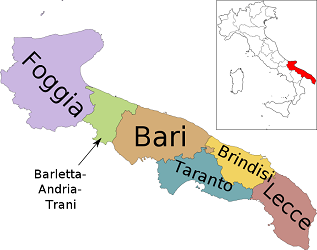
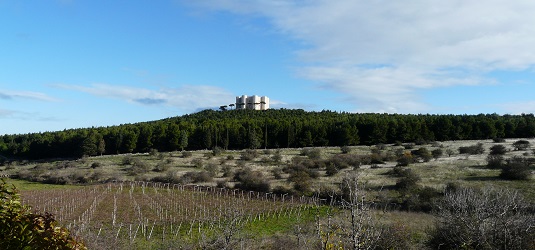
History and Tradition The southern portion of the region is a flat and fertile peninsula that forms the characteristic heel of the Italian "boot". In ancient times only the northern part of the region was called Apulia while the southern peninsula was known as Calabria, a name later used to designate the toe of the Italian "boot". The region was settled by several Italic tribes and by Greek colonists before it was conquered by Rome in the 4th century B.C. As usual, the Romans organized the land in agricultural parcels, built roads and established new settlements. After the fall of the Roman Empire, as much of the rest of southern Italy, Apulia was held at alternate times by the Goths, the Lombards and the Byzantines. In the 11th century the Normans conquered it and Robert Guiscard set up the duchy of Apulia in 1059. After the Norman conquest of Sicily in the late 11th century, Palermo replaced Melfi as the center of Norman power. Apulia became then a mere province, first of the kingdom of Sicily, then of the kingdom of Naples and the Two Sicilies. The Turks and the Venetians later occupied the coastline alternatively until 1861, when the region joined the unified Kingdom of Italy. Social and agrarian reforms proceeded slowly in the 19th century and accelerated considerably in the mid-to-late 20th century Apulia is mostly a plain but the mountainous Gargano Peninsula breaks through its low coast to the north. There are mountains in the north central part of the region. Industry has expanded rapidly in the 20th century but farming still represents the main occupation in the region. Regional products include olives, grapes, cereals, almonds, figs, tobacco and livestock, including sheep, pigs, cattle and goats. Manufacturing includes refined petroleum, chemicals, cement, iron, steel, processed food, plastics and wine. The fishing industry is active in the Adriatic and in the Gulf of Taranto. The Wines Apulia produces more wine than any other Italian region usually making up around 17% of the national total. It also competes with Sicily for first place as grape producer. For a long time much of the wine made here was shipped north to Turin were it was used to make Vermouth, or to France where it was used to give structure to French wines when the local harvest was either poor or insufficient. In recent years, Pugliese vintners have changed their views and tastes and are pursuing wines that effectively balance sweetness, acid, alcohol content and density. Apulia counts 25 DOC wines including the Primitivo di Manduria, a red named after the grape with the same name that a California researcher, Carole Meredith, proved to have the same DNA as the American Zinfandel, the appreciated and prize-winning California Grape. The Accademia dei Racemi, an association that brings together vintners, agronomists and oenologists is dedicated to promoting and enhancing the quality of wine production in the region. Under the leadership of Mr. Gregory Polucci, it produces an excellent Primitivo and is experimenting with Zinfandel grapes imported from the USA. A special mention should be made of Salice Salentino, a powerful red produced in the Lecce province. It is made primarily with Negro Amaro and has gained an enthusiastic following abroad because of the excellent ratio quality-price. Puglia has long seen a prevalence of co-operative wine production. As both Italian and European community subsidies for co-op wineries have almost completely dried up, these large establishments and their grape-grower members are facing the choice of either changing their politics or risking annihilation. This is probably best for wine connoisseurs, as many co-ops have already scaled back production in order to focus on quality, branded, bottled wines.
-
Basilicata
History and Tradition
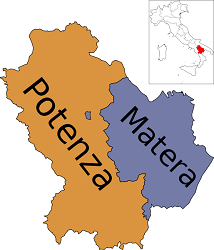
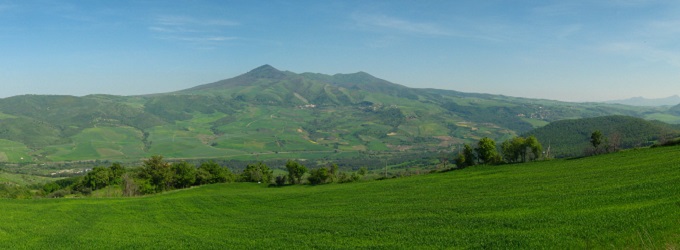
Bound by forested hills and mountains prone to temperature extremes, the slim central plain was given to frequent seawater floods that transformed the coastline into marshes, making this land sparsely inhabited until the Lucanian people made their homes among caves carved from the mountains. The ancient name of the region was Lucania from the first known settlers, the Lucanians people whose name was derived from the root lucus or “forest” in Latin. Sannites tribes inhabited the area as well, before the Greeks took it in the 7th century B.C. They founded such colonies as Siris, Metaponto and Eraclea developing rudimentary agriculture and encouraging commerce. From the 3rd century B.C. the Romans colonized the region and began a policy of deforestation to provide wood for building cities and fleets and they also divvied up the land for cultivation. The process of deforestation went on for centuries [, eventually exhausting the natural wood resources of the native forest toward the decline and fall of the Empire. The Byzantines followed the Romans and gave the region its current name of Basilicata, derived from basilikos which means both "prince" and "governor". Normans and Germanic Swabians invaded the area as well but the devastating violent raids of Saracens pirates forced the local population to move from the seacoast inland to the relative safety of the agriculturally poor mountains. After the unification of Italy in the late 19th century, the Italian government confiscated enormous parcels of land from the Roman Catholic Pontiffs and re-distributed it to a handful of noble families who had little interest in developing it, and as a result, the area languished and the socio-economical decline continued. The extreme poverty created such phenomenon as brigantaggio, or the "rule of bandits". The Church and some fringes of the nobility supported rebellions against the new State and the movement grew into a real political and guerrilla-like conflict that continued for years. Only after WWII were improvements to the organization and distribution of the arable land through the creation of small agricultural companies able to bring some prosperity and stability to the area. Finally, the discovery of methane-fields in the 1960s and 1970s brought industry to the region in the form of petrol-chemical and fiber plants. The Wines. Although Basilicata produces only one DOC wine, the quality of it is such that it ranks at the forefront among the best known and appreciated Italian reds. Aglianico, the name of the original grape, is a corruption of the word "Hellenic" or Greek. In fact, as there are no native grapes in this region, the plant was brought over by the Greeks when they settled there in pre-Roman times. The result is that this grape was made into wine long before many native varieties in the northern regions. The Greeks planted many vines in the zones around the Mount Volture from which some of the best Aglianico still comes today. The single DOC, Aglianico del Volture, was named after this area as well.
-
Calabria
History and Tradition Bound by forested hills and mountains prone to temperature extremes, the slim central plain was given to frequent seawater floods that transformed the coastline into marshes, making this land sparsely inhabited until the Lucanian people made their homes among caves carved from the mountains. The ancient name of the region was Lucania from the first known settlers, the Lucanians people whose name was derived from the root lucus or “forest” in Latin. Sannites tribes inhabited the area as well, before the Greeks took it in the 7th century B.C. They founded such colonies as Siris, Metaponto and Eraclea developing rudimentary agriculture and encouraging commerce. From the 3rd century B.C. the Romans colonized the region and began a policy of deforestation to provide wood for building cities and fleets and they also divvied up the land for cultivation. The process of deforestation went on for centuries [, eventually exhausting the natural wood resources of the native forest toward the decline and fall of the Empire. The Byzantines followed the Romans and gave the region its current name of Basilicata, derived from basilikos which means both "prince" and "governor". Normans and Germanic Swabians invaded the area as well but the devastating violent raids of Saracens pirates forced the local population to move from the seacoast inland to the relative safety of the agriculturally poor mountains. After the unification of Italy in the late 19th century, the Italian government confiscated enormous parcels of land from the Roman Catholic Pontiffs and re-distributed it to a handful of noble families who had little interest in developing it, and as a result, the area languished and the socio-economical decline continued. The extreme poverty created such phenomenon as brigantaggio, or the "rule of bandits". The Church and some fringes of the nobility supported rebellions against the new State and the movement grew into a real political and guerrilla-like conflict that continued for years. Only after WWII were improvements to the organization and distribution of the arable land through the creation of small agricultural companies able to bring some prosperity and stability to the area. Finally, the discovery of methane-fields in the 1960s and 1970s brought industry to the region in the form of petrol-chemical and fiber plants. The Wines. Although Basilicata produces only one DOC wine, the quality of it is such that it ranks at the forefront among the best known and appreciated Italian reds. Aglianico, the name of the original grape, is a corruption of the word "Hellenic" or Greek. In fact, as there are no native grapes in this region, the plant was brought over by the Greeks when they settled there in pre-Roman times. The result is that this grape was made into wine long before many native varieties in the northern regions. The Greeks planted many vines in the zones around the Mount Volture from which some of the best Aglianico still comes today. The single DOC, Aglianico del Volture, was named after this area as well.
-
Sicily
History and Tradition One of the first inhabited areas of Italy, Sicily was named after the ancient Siculians who introduced agriculture and animal husbandry in the 3rd millennium B.C. The Phoenicians came next; they founded a number of commercial centers and started intensive exploitation of the forests for construction of settlements and boats. Between the Eighth and Third centuries B.C., the Greeks, who sometimes referred to the Island as Trinacria, a reference to the region's triangular shape, ruled the island. They founded numerous colonies and developed commerce and agriculture. The Romans were the next colonizers to inhabit and control the island, making Sicily the granary of the empire. They built new roads and re-enforced the already existing settlements and agricultural and commercial systems. Starting from 827 A.D., repeated attacks by Arabic pirates prompted the fortification and enlargement of Palermo's port. The city itself was rebuilt several times, prompting a period of island-wide growth and expansion. The spread of irrigation, introduction of jasmine, citrus, cotton and other new cultivated crops contributed to an overall increase in agricultural production. The Normans inhabited Sicily next, and later the Germans, continuing the improvements to the island, but under the subsequent Angevin, Aragon and Spanish domination, the trend was reversed. Sicily in the end became a Spanish colony and agriculture languished as the land was parceled into large estates characterized by low productivity. In the 19th century the criminal organization famous all over the world as the Mafia was born and, when Sicily became a part of the newly born Italian state in 1860, they took real territorial control of the island. After the WWII the Italian government conducted a program of economic development for Sicily. Wide estates were re-parceled into smaller units, and the coastal lands reclaimed and transformed into cultivable fields. Industrialized cities, construction of new roads and railways, along with the development of tourist industries has helped to improve the overall quality of life on the island. The Wines Sicily has more vineyards than any of the other Italian regions competing with Apulia for first place as the largest wine producer. Yet, Sicilians consume less wine per capita than any other Italian. Many grapes are made into raisins, used in local cooking, and Sicilian grapes also play a large role in creating dessert wines, which require a higher concentration of grapes and are consumed in smaller quantities. In fact, in the world of international wine, Sicily is renowned for the many outstanding dessert wines, such as the world-famous Marsala. Though dessert wines account for about 90% of the total DOC production, we shouldn't disregard the several good reds and whites that are produced all over the island by both large producers such as the Conte di Salaparuta, which makes the well-known Corvo, Regaleali and Rapitalà, and the smaller estates such as Donnafugata, Consorzio Agrario Provinciale di Trapani, and Fontanarossa among others. If you happen to travel to the island around November 11, the day dedicated by the catholic church to Saint Martin, look for signs announcing the local Festa del Vino or "Festival of the Wine". It is believed that on this date the new wine is ready for consumption, hence the saying: Il giorno di San Martino il mosto diventa vino or "On Saint Martin's Day the grape juice becomes wine".
-
Sardegna
History and Tradition A wine tour of Sardinia takes the visitor into a sensational journey of pleasures that transcends the visitation of historical production places and wineries. It is a journey that involves all the senses: perfumes, flavors and colors of Sardinia beckon as one leaves the larger cities behind. The full range of sensations have a deeper impact upon the first-time visitor, or on the visitor who returns after a long absence. The wine routes of the island lead to fantastic landscapes where viticulture has been in existence since pre-Roman times, a tradition that began with the people of the nuraghi and continues into the third millennium. From the Romans to the late Sardinina-Piedmontese kingdom, through the Tuscan and Genovese fiefdoms, the Benedictine or Camaldolean monks and the Spaniards, all contributed to expand and introduce new techniques. The panorama is never monotonous or repetitive and at times displays or hides the remote, unique and complex origins of this Mediterranean island. This is the most ancient land of Italy. It's well-known that soil composition and climate play an important role in grape growing and wine production. Such a favorable combination of such elements contributed to making the Vermentino di Gallura one of the only four Italian DOCG white wines. The Vermentino, with its delicate aromas of fruit and hint of almonds in the finish, is a wine to be drunk young. In addition to being the perfect complement to all kinds of seafood recipes, from shrimp salads to elaborate seafood platters with vegetables and smoked cernia or swordfish, this wine is delicious as an exciting aperitif for all occasions. The Vermentino di Gallura DOCG finesse comes from the combination of ongoing quality control, the richness of the granite decomposition of soil and the microclimate where the original grapes are grown. In Gallura, the Moscato and Nebbiolo grapes thrive as well. The spumante-dolce version of the 'Moscato di Tempio DOC' is among the most delicate and appreciated dessert wines produced on the island. The red Nebbiolo, known as 'Nebbiolo di Luras', has recently met with a widespread success among wine lovers. In the northwestern part of the island, the Torbato vines grow on seafront fields near Alghero. Of ancient Spanish origin, the Torbato grape produces a dry white wine that in the last twenty years has reached international appreciation. It is produced with selected grapes as well in a special version known as Terre Bianche or White Lands in addition to a spumante brut version. In addition to Torbato, the vineyards around Alghero include Cannonau, the most famous red wine produced in Sardinia. The 'Vermentino di Sardegna', the Nasco and, more recently, the red Cabernet Sauvignon and the white Sauvignon have found an extremely favorable habitat here. The areas of Usini and around Sassari are examples of the favorable island habitat that contributed to the popularity of the Vermentino di Sardegna. Moving south to the hilly sites of the Planargia, in the Nuoro province, one finds the well-known Malvasia di Bosa DOC, a semi-sweet meditation / conversation white wine with typical flowery bouquet. A spumante demi-sec version is currently available as well. Still in the Nuoro province, opposite the coastal area of Bosa one finds the production area of the extraordinary Cannonau - Nepente di Oliena, a wine celebrated by the poet Gabriele d'Annunzio. The Nepente di Oliena comes from grapes grown on a kind of soil rare in Italy, a clay similar in composition to the one where the Champagne of Reims is cultivated. Good quality Cannonau DOC is also produced around Oliena and Ogliastra. Moving south, one finds the red and rosé Mandrolisai DOC production area around the center of Sorgono. In the valley of Tirso and the Oristano plains, located at the same latitude of of the Mandrolisai growing area but on different habitat another famous Sardinian wine, the Vernaccia di Oristano DOC is produced. This is an ancient, aging, golden yellow white wine that can be compared to the best Jerez wines. It is a perfect meditation / conversation wine that can be paired with the most refined of the traditional island pastries. Also of ancient origins is the Semidano grape, which in recent times saw new appreciation for both the dry and sweet versions. From the Oristano area comes the Nieddera as well, a wine particularly good with barbeque and game. Moving to the southernmost tip of the island, one finds the Nuragus di Cagliari DOC made from the Nuragus, arguably the most ancient grape cultivated in Sardinia. A dry white wine that recently acquired national respect thanks to the careful production of local winemakers. In recent years, the warm and full-flavored Malvasia di Cagliari DOC has also seen a rise in popularity similar to that of the Nuragus. Along the plain of Campidano and in the areas of Serrabus - Muravera are produced various brands of excellent Cannonau di Sardegna and delicious Monica di Cagliari DOC. As final a final destination on our wine testing tour of the island from north to south, we would like to propose the Carignano del Sulcis DOC. Probably imported in ancient times by the French, the Carignano del Sulcis is today a precious wine that confirm the excellent connection between the ancient and the modern achieved by Sardinian oenology. As a corollary to the wine list of Sardinian wines, we must not forget the production of dessert wines, liquor-like wines and meditation wines that are usually passiti and contains higher alcoholic percentage. The Cannonau produced around Alghero, Oliena and Tortolì are red passiti, while Vermentino and Nasco produced around Monti and Alghero are white passiti. In addition, excellent grappe from single grapes are produced all over the island, such as the Cannonau Passito or Nasco Passito of Alghero, the Vermentino of Monti, Moscato and Vermentino in Bosa and the Vernaccia in Oristano.